
1. Product Overview
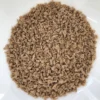
Textured Soy Protein Food Grade is a high-quality plant-based protein ingredient produced from defatted soy flour or soy protein concentrate and processed into a textured form to provide a meat-like bite and structure. It is widely used in food manufacturing as a functional protein for meat analogues, processed foods, ready meals, fillings, and nutritional products. Its strong water-binding, protein content, and texture-forming properties support cost-efficient formulation while maintaining desirable product structure and mouthfeel. As demand for plant-based and protein-enriched foods continues to expand, textured soy protein provides manufacturers with a scalable and versatile ingredient for modern food production.
2. Key Specifications & Technical Characteristics
- Product: Textured Soy Protein (TSP)
- Grade: Food Grade
- Primary Material: Defatted soy protein/soy flour
- Protein Content: Typically high-protein; specification available according to grade
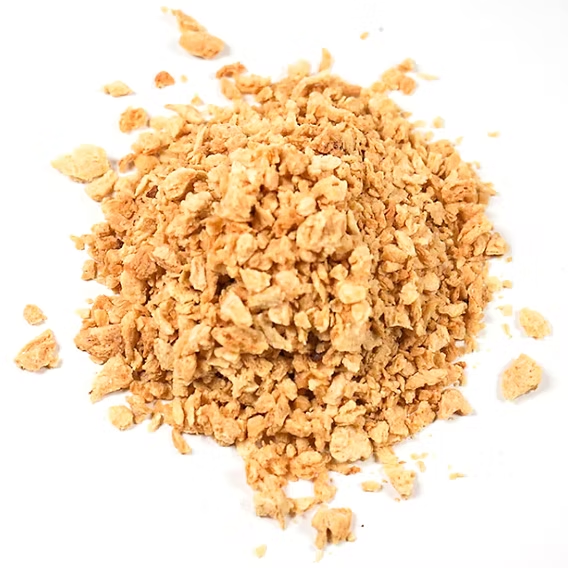
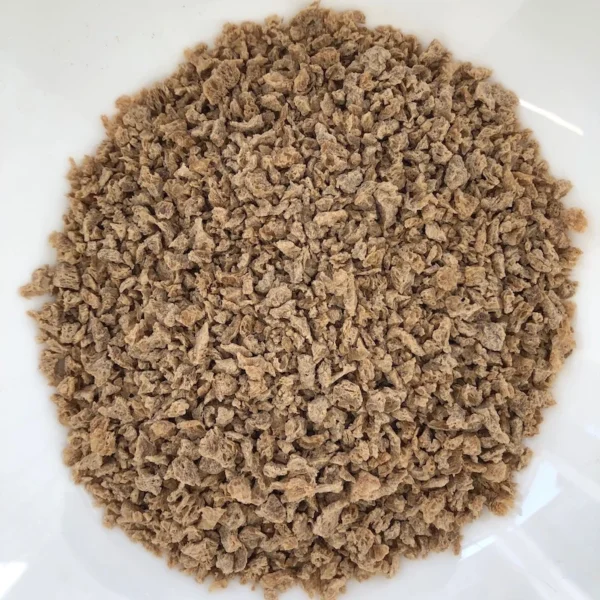
- Form: Textured granules, chunks, flakes, or mince
- Color: Light cream to pale yellow
- Texture: Porous, fibrous structure designed to absorb water and provide meat-like texture
- Functional Properties: Excellent water absorption, binding, texture enhancement, and protein fortification
- Moisture: Controlled to meet applicable food-grade specifications
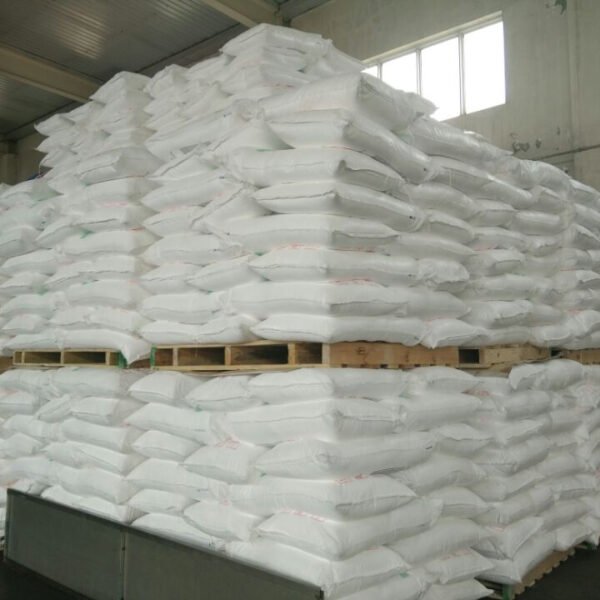
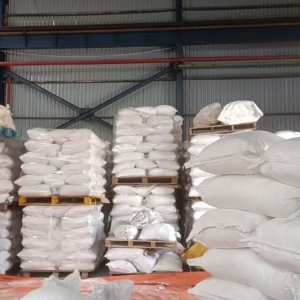
- Packaging: 25kg food-grade bags
- Shelf Life: Typically 12–24 months when stored in a cool, dry environment in sealed original packaging
- Storage: Protect from moisture, direct sunlight, heat, and contamination
- Documentation: Product specification, certificate of analysis, and relevant food-safety documentation available upon request
3. Core Industrial Applications
Textured Soy Protein is primarily used by food processors, plant-based protein manufacturers, meat-alternative producers, ready-meal manufacturers, and nutritional food companies. It is suitable for burgers, meatballs, sausages, nuggets, mince-style products, fillings, canned foods, instant meals, and other protein-enriched formulations. Its porous structure absorbs water, sauces, and seasonings efficiently, helping manufacturers achieve desirable texture and flavor while reducing dependence on higher-cost protein ingredients. Compared with conventional protein extenders, TSP offers consistent texturization, functional versatility, and efficient incorporation into large-scale food production.
4. Competitive Advantages
- Quality Consistency: Uniform texture and functional performance support reliable batch-to-batch production.
- High Functional Performance: Strong water absorption and binding characteristics improve yield, texture, and product structure.
- Supply Reliability: Suitable for bulk procurement programs and recurring industrial requirements.
- Logistics Capability: Standardized 25kg packaging facilitates handling, warehousing, palletization, and international shipment.
- Price Competitiveness: Provides manufacturers with a cost-effective plant-based protein and meat-extension solution.
- Sustainability: Plant-based protein can support reduced reliance on animal-derived ingredients and more resource-efficient product formulations.
- Technical Documentation: Product specifications, quality documentation, and certificates of analysis can be provided to support procurement and quality-control requirements.
- Strategic Sourcing: Combines functional performance, scalable supply, and commercial efficiency for manufacturers seeking dependable plant-protein sourcing.
5. Commercial & Supply Information
- Packaging: 25kg bag
- Minimum Order Quantity (MOQ): BULK 20MT
- Loading Capacity: Typically approximately 20–24 MT per 20-foot container, subject to packaging configuration, palletization, and applicable loading restrictions
- Supply: Bulk and international supply available
- Documentation: Commercial and quality documentation available upon request
Reviews
There are no reviews yet.