
1. Product Overview
Battery Grade Nickel Sulfate is a high-purity nickel compound engineered for advanced battery-material production, particularly nickel-rich lithium-ion battery cathodes. It provides a consistent nickel source for manufacturing nickel-cobalt-manganese (NCM) and related precursor materials, supporting reliable electrochemical performance and production efficiency. Its controlled quality and industrial-grade consistency make it a strategically important raw material for the expanding global electric vehicle and energy-storage supply chain.
2. Key Specifications & Technical Characteristics
- Product: Battery Grade Nickel Sulfate
- Chemical Formula: NiSO₄·6H₂O (commonly supplied as nickel sulfate hexahydrate)
- Grade: Battery Grade
- Nickel Content: Typically approximately 22–23% Ni, subject to specification
- Purity: High-purity industrial battery-material grade
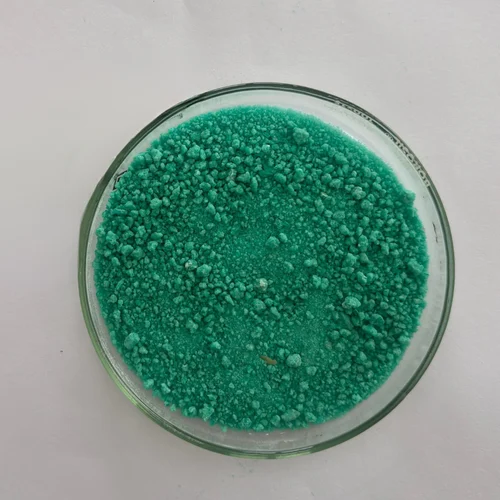
- Physical Form: Crystalline powder or granules
- Color: Blue to greenish-blue
- Solubility: Highly soluble in water
- Particle Characteristics: Controlled particle size suitable for downstream precursor processing
- Impurity Control: Low levels of critical impurities to support cathode precursor quality
- Packaging Options: 25 kg bags, 500–1,000 kg jumbo bags, or customized bulk packaging
- Shelf Life: Typically 12–24 months when stored sealed in a cool, dry environment
3. Core Industrial Applications
- Lithium-Ion Battery Manufacturing: Primary nickel feedstock for producing cathode active materials.
- NCM/NMC Precursor Production: Used to manufacture nickel-rich nickel-manganese-cobalt precursor materials.
- Electric Vehicle Batteries: Supports high-energy-density battery chemistries used in EV applications.
- Energy Storage Systems: Used in rechargeable battery systems requiring high-performance nickel-based cathode materials.
- Advanced Battery Materials: Provides a controlled nickel source for specialized cathode and precursor formulations.
Its high purity, controlled impurity profile, and consistent composition support stable precursor synthesis, helping manufacturers improve process control, material yield, and overall battery-material quality.
4. Competitive Advantages
- Quality Consistency: Controlled chemical composition and impurity levels support repeatable downstream processing.
- Supply Reliability: Structured bulk sourcing supports continuous industrial production requirements.
- Logistics Capability: Flexible packaging and containerized bulk shipment options facilitate international supply chains.
- Price Competitiveness: Bulk procurement enables cost-efficient sourcing for high-volume battery-material manufacturers.
- Sustainability: Supports the expanding transition toward electric mobility, renewable-energy storage, and lower-carbon technologies.
- Technical Documentation: Product specifications, certificates of analysis (COA), safety documentation, and quality documentation can be provided subject to order requirements.
- Strategic Sourcing Value: A dependable nickel feedstock can strengthen supply continuity and reduce procurement risk across battery-material operations.
5. Commercial & Supply Information
- Minimum Order Quantity (MOQ): BULK 20 MT
- Loading Capacity: Approximately 20–25 MT per 20-foot container, subject to packaging, container regulations, and final loading configuration
Reviews
There are no reviews yet.